Table of Contents
In today’s digital first world, every brand big or small is competing for attention. Yet, small businesses often feel they are at a disadvantage due to limited budgets, smaller teams, and fewer resources. Fortunately, the rise of social platforms has leveled the field. Social media marketing in small business is no longer just an option, it has become one of the most powerful, cost-effective tools to build visibility, connect with customers, and drive sales.
This blog explores how small businesses can use social media to grow, the benefits they stand to gain, and practical strategies to build an impactful online presence.
Why Social Media Matters for Small Businesses?
The modern customer journey begins online. People discover brands on Instagram, check reviews on Facebook, follow updates on LinkedIn, and watch product videos on TikTok. This high level of user engagement is the reason social media marketing in small business has transformed from a trend into a necessity.
Unlike traditional advertising TV, print, radio, social media allows small businesses to market affordably while engaging directly with their audience. Even with limited funds, small businesses can create content, tell their stories, and build genuine relationships that lead to trust and loyalty.
Benefits of Social Media Marketing in Small Business
1. Cost-Effective Brand Visibility
One of the biggest advantages of social media marketing is that it does not require a massive budget. Creating a Facebook page or posting on Instagram is free, and even paid ads can cost as little as a few dollars a day. This allows small brands to compete with larger competitors without spending heavily.
2. Direct Interaction With Customers.
Social media eliminates barriers between customers and businesses. Through comments, messages, and shares, small businesses can answer questions and gather feedback in real time. This two-way communication strengthens relationships and enhances customer satisfaction.
3. Increased Website Traffic.
Social posts, reels, and ads can drive users from social platforms directly to your website or online store. When consistently executed, social media marketing in small business leads to higher traffic and improved conversion opportunities.
4. Enhanced Customer Trust:
Consumers trust brands that show transparency. Sharing behind-the-scenes content, customer testimonials, or product tutorials helps small businesses appear more authentic and approachable. This authenticity is essential for long-term brand loyaltY.
5. Better Understanding of Customer Needs.
Analytics tools on platforms like Meta Business Suite, Instagram Insights, and TikTok Analytics provide valuable data on customer behavior. This data-driven approach makes social media marketing more targeted and effective, enabling brands to refine their content and communication.
Top Platforms for Social Media Marketing.

Not every platform is right for every business. Small businesses should identify where their ideal customers spend their time.
1. Facebook
With its massive user base and powerful advertising tools, Facebook is excellent for community building, running ads, and sharing updates. It suits service-based businesses, local shops, and home-based entrepreneurs.
2. Instagram
Highly visual and perfect for branding, Instagram is ideal for businesses that want to showcase products, lifestyle content, or creative visuals. Reels and Stories help reach new audiences quickly.
3. TikTok
TikTok offers a huge opportunity for organic reach. With its algorithm favoring creativity over followers, social media marketing becomes easier for brands willing to experiment with short-form video.
4. LinkedIn
Best for B2B companies, coaches, consultants, and freelancers. LinkedIn helps build professional credibility and connect with decision-makers.
5. Pinterest
Great for businesses in the niches of fashion, food, home décor, beauty, DIY, and design. Pinterest drives high-intent traffic to blogs, online stores, and websites.
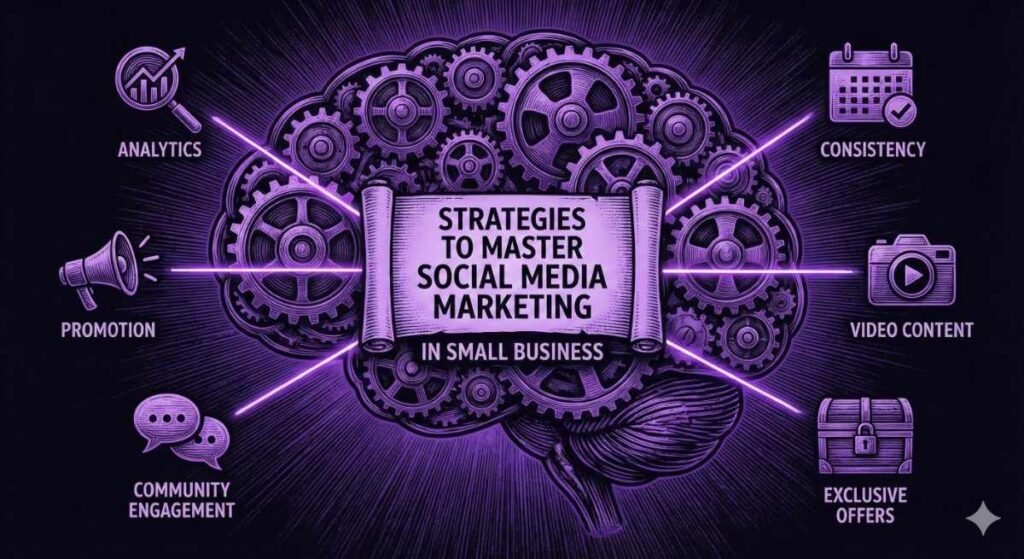
Strategies to Master Social Media Marketing in Small Business
1. Build a Strong Brand Identity
Before posting content, define your brand voice, tone, colors, and messaging. Strong branding helps customers instantly recognize your business and feel connected.
2. Create valuable, consistent content.
Content is the heart of social media marketing in small business. Educational tips Tutorials or how-to content Customer testimonials Behind-the-scenes clips Product showcases Industry insights Fun, interactive polls or quizzes Consistency matters more than perfection.fection. Posting regularly increases visibility and engagement.
3. Use Videos to Capture Attention.
Short videos, especially Reels and TikToks, perform exceptionally well. They allow small businesses to share stories, demonstrate products, and appear more relatable.
4. Leverage User-Generated Content (UGC):
UGC builds trust and makes social media marketing more authentic and relatable.
5. Engage Actively With Your Audience.
Replying to comments, responding to messages, and participating in conversations show customers you value them. Engagement boosts the algorithm and increases the visibility of your content.
6. Collaborate With Micro-Influencers.
Micro-influencers (1k–50k followers) are affordable and highly effective. Their smaller communities trust them more, making collaborations beneficial for growing small businesses.
7. Use Paid Advertising wisely.
Small amounts spent strategically on ads can yield excellent results. Facebook and Instagram ads allow precise targeting based on age, interests, behavior, and location.
Paid ads amplify the power of social media marketing in small business by reaching the right audience at the right time.
Real-World Examples of Social Media Marketing Success
Local Cafés and Bakeries
Many small food businesses use Instagram to post visually appealing pictures of their dishes, daily specials, and customer reviews. With consistent posting and local hashtags, they attract more walk-in customers.
Home-Based Craft Stores
Small artisans selling handmade products often rely on Facebook Marketplace and Instagram Reels to showcase their creations. Video clips help them reach thousands of potential buyers.
Boutiques and Beauty Salons.
Before-and-after photos, transformation videos, and customer testimonials help small beauty businesses stand out. Booking systems linked on social platforms increase appointment rates.
These real-world examples show just how powerful social media marketing in small business can be when used creatively and consistently.
Common Mistakes to Avoid
Posting Without a Plan
Posting randomly makes results inconsistent. A content calendar helps maintain consistency.
Ignoring Analytics
Social platforms provide insights for a reason. Use them to understand what works.
Overly Promotional Content
Customers prefer value to constant sales pitches. Mix educational and entertaining content with promotional posts.
Not Engaging With Followers
Social media is a two-way street. Engagement boosts visibility and builds relationships.
Future Trends in Social Media Marketing for Small Businesses:
The digital landscape is evolving rapidly. Here is what small businesses should prepare for:
- More short-form video content
- AI-driven content recommendations
- Higher demand for authentic, unpolished content
- Increased use of social commerce (built-in shopping features)
- Greater emphasis on community building
Staying updated with trends ensures social media marketing remains effective and competitive.
Conclusion:
Social media is one of the most powerful tools small businesses can use to grow sustainably and cost-effectively. By understanding their audience, creating consistent content, leveraging video, and engaging authentically, even the smallest of brands can build a strong digital presence.
The role of social media marketing in small business continues to expand, offering endless opportunities to showcase products, connect with customers, and increase sales. With the right strategy, small businesses can turn social media into a long-term engine for brand loyalty, visibility, and growth.